
Best yarn for beginners is the question every new crafter asks before stepping into a craft store or browsing skeins online. Choosing the right fiber, weight, and color profile can make the difference between a joyful, relaxing first project and an afternoon spent wrestling split plies and invisible stitches. With dozens of fiber types available, finding the best yarn for beginners ensures your stitches remain clear, your tension stays balanced, and your progress feels smooth and rewarding from row one.
Table of Contents
5 Top Fibers That Make the Best Yarn for Beginners
Selecting the best yarn for beginners involves balancing fiber elasticity, stitch visibility, affordability, and washability. In the comprehensive textile history on Wikipedia’s yarn guide, spun strands range from natural animal hair to engineered synthetics, each possessing unique structural behaviors. Below are the five top-rated fibers tested specifically for novice hands.
1. Medium Worsted Acrylic: The Low-Stress Practice Classic
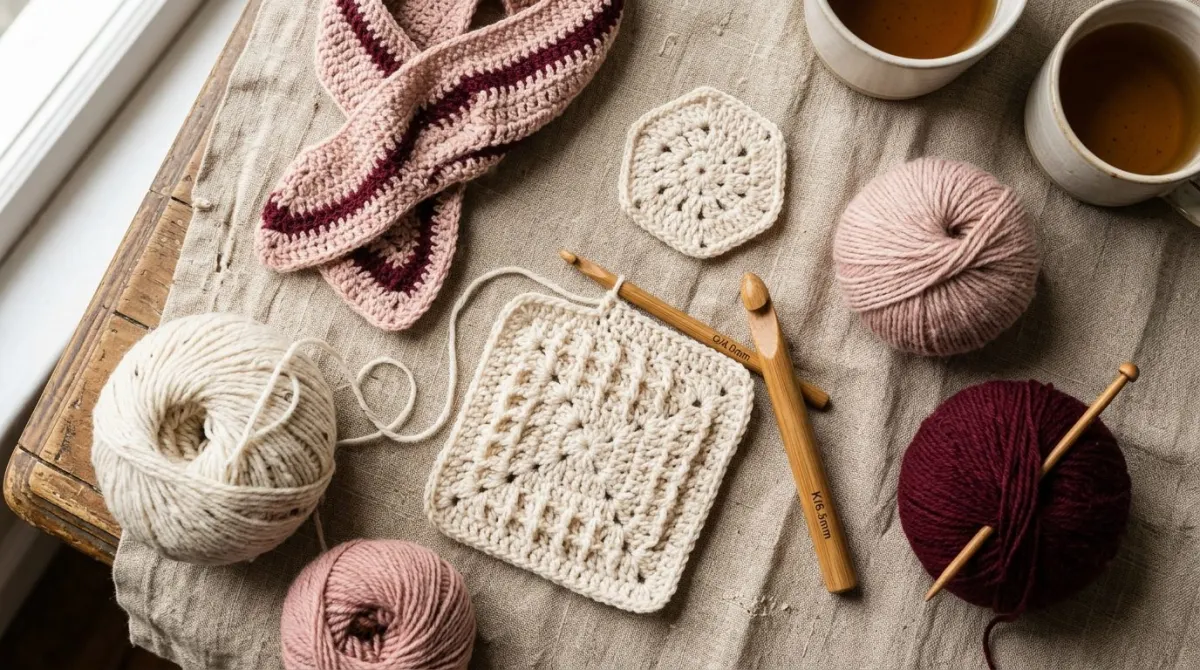
Quality premium acrylic in a #4 worsted weight is widely considered the overall best yarn for beginners. It is budget-friendly, widely accessible, machine-washable, and offers gentle springiness that forgives inconsistent novice tension.
Modern acrylics are vastly softer than vintage scratchy yarns, with pill-resistant plies that withstand frequent unravelling (frogging) while you practice foundational single and double crochet stitches. Light pastel or neutral tones showcase your stitch anatomy crisply, allowing you to quickly spot missed loops.
2. Mercerized Cotton Blends: Clean Stitch Definition for Home Goods
Cotton provides unmatched stitch crispness and structural stability. Mercerized cotton undergoes a specialized smoothing treatment that adds a subtle sheen and removes surface fuzz, creating laser-sharp stitch definition.
While 100% cotton has zero natural stretch—meaning you must pay close attention to not gripping your hook too tightly—cotton-blend yarns (such as 60% cotton, 40% acrylic) offer the perfect hybrid. They produce lightweight breathability and stitch clarity ideal for warm-weather tops in our crochet garment patterns collection.
3. Superwash Wool: Warmth and Elastic Resilience
Wool is nature’s miracle fiber: breathable, temperature-regulating, and wonderfully springy. The natural crimp in sheep wool provides natural memory, helping your fabric bounce back into shape even if your early tension varies slightly across rows.
Superwash wool is treated so that microscopic fiber scales do not felt together during gentle machine washing. For crafting cozy winter beanies, mittens, and cowls, superwash merino remains a top contender for the best yarn for beginners looking for luxury feel and durable wear.
4. Bamboo and Viscose Blends: Fluid Drape for Garments
Bamboo rayon and viscose yarns deliver a silky, cool-to-the-touch texture with dramatic, fluid drape. While slippery on slick metal hooks, pairing bamboo yarn with smooth wooden or bamboo hooks creates an enjoyable, mindful rhythm.
Novice crafters interested in creating heirloom baby blankets or summer crop tops will appreciate bamboo’s hypoallergenic qualities and sustainable origins. Ensure your pattern calls for lightweight yarn before starting, and refer to our companion guide on how to read a crochet pattern to ensure correct yardage calculations.
5. Recycled Cotton Cord: Structured Form for Bags and Baskets
For home decor and bag projects, cotton cord or macramé-style braided yarn eliminates splitting entirely. Because the yarn is braided rather than twisted, your hook tip never pierces between individual fibers.
This structural rigidity produces firm, freestanding sides for market totes and desktop storage pots. You can explore modern examples of this texture across our curated amigurumi crochet patterns and accessory designs.
3 Critical Yarn Mistakes Every Beginner Should Avoid
Avoid these three common shopping pitfalls when selecting your initial skeins:
1. Choosing Chenille or Velvet Fluffy Yarns First: While fluffy plush yarns feel cloud-soft in the shop, their thick fuzzy halo completely conceals the “V” loops of stitches, making counting nearly impossible for beginners.
2. Buying Dark Navy or Jet Black Yarn: Dark colors absorb light and shadow, obscuring row progression and leading to eye strain. Stick to soft oatmeals, blush pinks, warm clays, or gentle sages for your first three projects.
3. Using Single-Ply Roving: Unspun roving yarn pulls apart with minimal tension and pills quickly under friction. Always choose multi-ply spun yarn with a visible, balanced twist.
Yarn Weight Categories and Hook Pairing Guidelines
The standard yarn numbering system defined by the Craft Yarn Council standard yarn weight system organizes yarn into 8 distinct categories, from #0 Lace to #7 Jumbo. For absolute beginner ease, stick strictly within Category #4 (Medium Worsted) or Category #3 (DK / Light Worsted):
- Category #3 (DK): 3.75 mm to 4.5 mm hook (US F-5 to 7)
- Category #4 (Worsted): 5.0 mm to 6.0 mm hook (US H-8 to J-10)
- Category #5 (Bulky): 6.5 mm to 9.0 mm hook (US K-10.5 to M-13)
How to Decode a Yarn Label Like an Expert
Every commercial skein comes wrapped in a paper ball band packed with vital crafting intelligence. Learning to read these standardized symbols prevents costly project mishaps. Look closely for the laundry care symbols: a tub with a hand indicates hand-wash only, while iron symbols indicate heat sensitivity. Synthetic acrylics melt instantly under direct irons, whereas cotton withstands hot steam.
You will also find the gauge square symbol, typically displaying a recommended hook size (such as 5.0 mm / H-8) and estimated stitch counts for a 4×4 inch square. While this provides a reliable starting point, remember that your personal tension may require adjusting up or down half a millimeter. Keeping the ball band tucked inside your yarn bowl ensures you never misplace fiber care details.
Quick Swatch Testing Before Starting a Full Project
Before committing 20 hours to a complete garment or blanket, spend fifteen minutes working a mini practice swatch of twenty stitches across eight rows. Practice single and double crochet stitches, paying attention to how smoothly the fiber glides across your hook throat.
If the plies separate frequently or your hook squeaks loudly against the yarn, consider changing your hook material—such as switching from metal to polished birchwood or resin. This quick test confirms whether you have chosen the best yarn for beginners for your specific hand ergonomics and tension rhythm.
Final Practical Tips Before Buying Your First Skein
Always inspect the yarn label for the dye lot number if purchasing multiple skeins. Skeins from different dye lots can have slight, noticeable tonal shifts under natural sunlight. Keep your yarn labels stored with your project hook until your project is finished for easy fiber care reference.
Investing in the best yarn for beginners gives you an easy, enjoyable start, setting you up for years of creative satisfaction and handcrafted pride.

