
First crochet project choices determine whether you fall in love with the craft or abandon your yarn basket in overwhelmed frustration. Picking a project that is too complex—like a multi-size lace cardigan or intricate colorwork blanket—can lead to burnout before you finish your foundation chain. Selecting the right first crochet project ensures quick satisfaction, builds steady muscle memory, and leaves you with a beautiful, functional item you will proudly wear or display at home.
Table of Contents
7 Rewarding Ideas for Your First Crochet Project
When picking your first crochet project, look for rectangular shapes, single-stitch repeats, and minimal shaping. In the broader scope of contemporary textiles documented in Wikipedia’s fiber art overview, small-scale repetitive crochet practice trains hand-eye coordination and tension regulation faster than large ambitious pieces. Below are seven confidence-building projects designed specifically for beginner success.
1. The Classic Ribbed Mug Cozy: Fast One-Hour Practice
A mug cozy is an ideal entry project because it requires only 20 to 30 rows of back-loop-only half double crochet. You can finish it in an evening, sew on a simple wooden button, and immediately wrap your favorite morning coffee mug.
Because the strip is narrow (around 3 inches wide), maintaining consistent row ends is straightforward, giving you fast feedback on your edge tension.
2. Textured Spa Washcloths: Mastering Even Tension
Cotton washcloths are celebrated staples in the maker community. Working in simple alternating single crochet and double crochet (the classic moss or lemon peel stitch) creates a rich, absorbent texture that holds up to daily home use.
Washcloths make thoughtful handcrafted gifts and allow you to sample different cotton yarn colors without spending a fortune. Pair with our easy crochet accessories patterns for matching bathroom baskets and hand towels.
3. The Cozy Infinity Scarf: Rhythmic Rows with Zero Shaping
If you want to create a wearable wardrobe piece as your first crochet project, choose an infinity cowl worked in double crochet. By working flat rows back and forth and seaming the ends together, you avoid the complexity of working in the round.
Because scarves do not require exact sizing like sweaters, minor gauge variations will not compromise the final fit. Refer to our guide on choosing the best yarn for beginners to select soft, itch-free fibers that feel gentle against your neck.
4. The Minimalist Tote Bag: Simple Construction with Daily Utility
Tote bags are among the most practical makes in modern crochet. Most beginner market bags consist of two simple rectangular panels seamed along the sides and bottom, topped with sturdy reinforced chain handles.
Our collection of modern crochet bag patterns showcases how minimalist lines and thoughtful stitches turn everyday cotton cord into chic carry-alls for farmer markets and weekend beach trips.
5. Pocket-Sized Amigurumi: Discovering Continuous Rounds
Crafters drawn to cute stuffed companions often choose a miniature sphere or pocket animal as their initial make. Working in continuous spiral rounds introduces the magic circle, single crochet increases, and invisible decreases.
Our beginner-friendly amigurumi crochet patterns include step-by-step assembly photos and safety eye placement guides to ensure your plush projects come together safely and neatly.
6. The Modern Granny Square Coaster: Corner Turns Made Easy
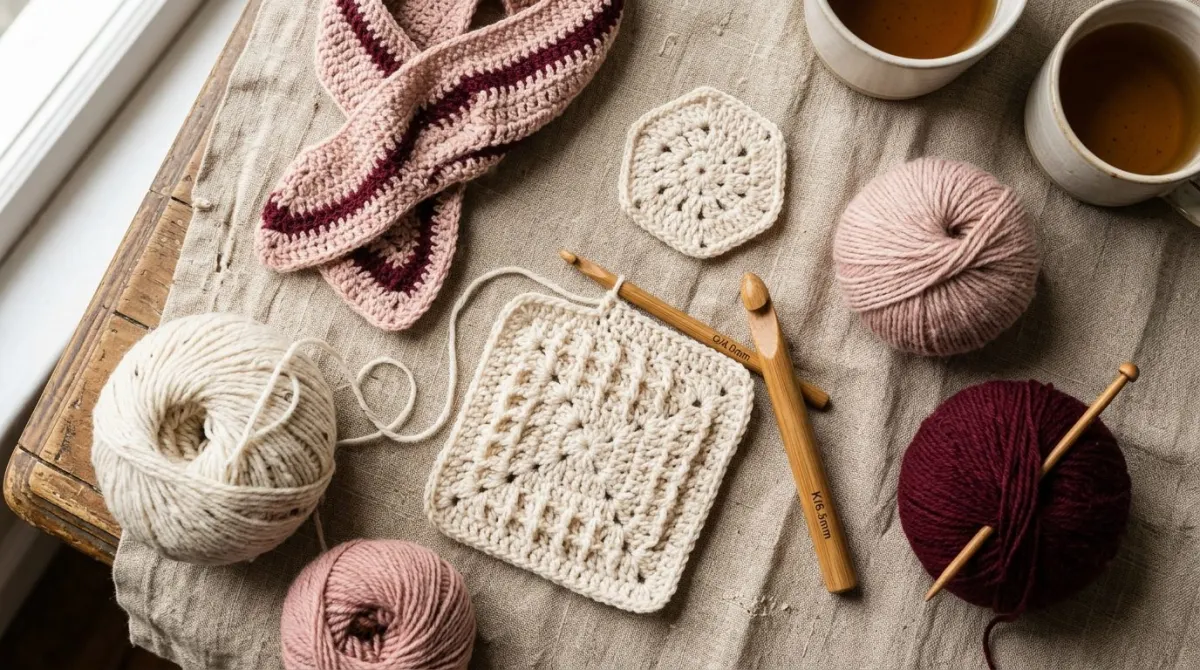
The traditional granny square teaches how to work clusters of stitches into chain spaces rather than the tops of individual loops. Crocheting a simple three-round square and blocking it flat yields a stylish coffee table coaster.
Once you understand how corner groups turn corners, you can join multiple squares into blankets, tote bags, and stylish cardigans.
7. The Slouchy Beanie: Your First Step into Crown Decreases
A ribbed beanie worked as a flat rectangle, seamed along the side, and cinched tightly at the crown creates an effortlessly modern hat without requiring double-pointed needles or complex mathematics.
This construction allows you to try on the band around your forehead as you work, ensuring a custom snug fit regardless of yarn choice.
3 Golden Rules When Choosing Your First Project
Before purchasing materials, run your chosen project through these three essential criteria:
1. Stick to Flat Rectangular Geometries: Avoid armholes, neckline curves, and collar shaping until your basic stitch height and tension are muscle-memory automatic.
2. Pick a Fast-Finishing Scale: Giant queen-sized blankets can take 60+ hours of repetitive labor, leading to mid-project fatigue. Choose projects that finish in under 6 to 8 hours.
3. Ensure Complete Written Support: Select patterns with row-by-row photos, stitch count totals at the end of every row, and video links for specialized techniques.
How to Regulate Inconsistent Tension in Early Projects
The single most universal challenge during your first crochet project is maintaining even hand tension. In your first few hours, your hands naturally tense up as you concentrate on stitch placement, causing your stitches to become progressively tighter. By row ten, your fabric may begin bowing inward or feeling stiff.
To overcome this natural hurdle, take regular five-minute hand stretches every thirty minutes. Hold your yarn gently draped over your index finger rather than winding it multiple times around your pinky. Allow the shaft of the hook—not the tapered throat—to dictate the loop diameter on every stitch.
Finishing and Blocking Your First Handcrafted Item
The secret that elevates a homemade craft into a polished, professional handmade creation is wet blocking. Once you fasten off your final yarn tail, use a blunt tapestry needle to weave your tail in three alternating directions through the backs of existing stitches.
Next, submerge your finished item in lukewarm water with a drop of gentle wool wash, press excess moisture out inside a clean towel, and pin the piece flat onto foam blocking mats using rust-proof T-pins. Once completely dry, your edges will be crisp, corners sharp, and stitch definition wonderfully even.
Essential Toolkit Checklist for Novice Makers
Equipping yourself with the right ergonomic notions makes learning far more enjoyable. As outlined by the Craft Yarn Council hook guidelines, hook sizing ranges from fine lace steel hooks to jumbo wooden tools. We recommend gathering:
- Ergonomic aluminum hook with soft silicone grip (5.0 mm / H-8)
- Locking plastic stitch markers (essential for tracking row beginnings)
- Blunt-tip steel tapestry needle with a large eye for weaving ends
- Sharp thread snips or embroidery scissors
- Soft retractable measuring tape for checking gauge
Starting with these thoughtfully chosen tools and a supportive project ensures your first crochet project is a proud milestone in a lifelong, creative crafting adventure.

